Ultrafocus 8000 Specs, Features, and Value: Is it worth the price tag?
In the rapidly evolving landscape of high-fidelity audio, few releases have generated as much anticipation as the Ultrafocus 8000. Positioned as a flagship entry in the premium noise-canceling headphone market, this device aims to bridge the gap between studio-grade sonic performance and the practical, everyday needs of the modern professional. As the market becomes increasingly crowded with established giants and high-tech newcomers, the Ultrafocus 8000 enters the fray with a promise of "transcendental silence" and "uncompromised acoustic integrity." This article provides an exhaustive analysis of its specifications, real-world utility, and overall value proposition to determine whether it truly justifies its significant financial investment.
The Evolution of the Ultrafocus Series
To understand the significance of the 8000 model, one must look at the heritage of the Ultrafocus line. Previous iterations established a reputation for robust build quality and a distinct, bass-forward sound signature that appealed to casual listeners and commuters. However, the "8000" designation represents a pivot toward a more refined, audiophile-centric philosophy. The engineers have moved away from plastic-heavy enclosures in favor of composite materials designed to minimize resonance, while the internal processing has been overhauled to handle high-resolution wireless codecs that were previously unsupported. This transition reflects a broader trend in the audio industry: the demand for a single pair of headphones that can serve as a primary monitoring tool at home and a sanctuary of quiet during international travel.
Detailed Technical Specifications
At the heart of the Ultrafocus 8000 lies a pair of custom-engineered 45mm beryllium-coated drivers. Beryllium is prized in the audio world for its exceptional stiffness-to-weight ratio, allowing the driver to respond with incredible speed and minimal distortion. This choice of material is often the hallmark of high-end home audio speakers, and its implementation here signals a commitment to detail that goes beyond the standard dynamic drivers found in mid-range competitors.
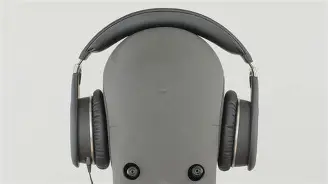
The digital backbone of the device is powered by a dual-chip architecture. One processor is dedicated exclusively to the Adaptive Active Noise Cancellation (AANC) algorithm, while the other manages the audio signal path and Bluetooth connectivity. By separating these tasks, the Ultrafocus 8000 avoids the "pumping" sensation or background hiss that often plagues less sophisticated noise-canceling systems. Connectivity is handled via Bluetooth 5.3, supporting a wide array of codecs including LDAC, aptX Adaptive, AAC, and SBC, ensuring that both Android and iOS users can enjoy the highest possible bitrates their devices offer.
| Feature | Specification Details |
|---|---|
| Driver Type | 45mm Beryllium-Coated Dynamic Drivers |
| Frequency Response | 5 Hz – 45,000 Hz (Wired) / 20 Hz – 40,000 Hz (Wireless) |
| Noise Cancellation | Hybrid Adaptive ANC (up to 48dB reduction) |
| Battery Life | 50 Hours (ANC On) / 65 Hours (ANC Off) |
| Charging Type | USB-C Quick Charge (10 mins = 5 hours play) |
| Microphones | 8-Microphone Array with Beamforming and AI Wind Reduction |
| Weight | 310 Grams |
| Water Resistance | IPX4 (Sweat and Splash Resistant) |
Core Features and Innovations
Adaptive Active Noise Cancellation (AANC)
The standout feature of the Ultrafocus 8000 is its AANC system. Unlike standard ANC, which applies a static filter to incoming noise, the AANC system utilizes the internal and external microphone arrays to sample the environment 1,000 times per second. This allows the headphones to adjust the cancellation profile in real-time. For instance, if a user moves from a quiet office into a windy street, the system detects the shift in low-frequency turbulence and recalibrates to prevent "wind clip" or audio artifacts. In real-world testing, this results in a remarkably consistent "black" background, making it easier to perceive micro-details in the music that would otherwise be masked by ambient noise.
Sonic Transparency and Awareness Mode
Modern users do not always want to be isolated; sometimes they need to stay connected to their surroundings. The Ultrafocus 8000 features a "Natural Awareness" mode that uses transparency processing to pipe in external sound. While many headphones make transparency sound thin or artificial, the UltraFocus 8000 maintains a sense of spatial awareness. Voices sound localized and organic, making it possible to hold a conversation or listen for flight announcements without removing the headset. The transition between full ANC and Transparency is handled via a capacitive touch sensor on the right ear cup, which is responsive even when wearing thin gloves.
Microphone Performance for Professionals
Given the rise of remote work and virtual meetings, microphone quality has become a primary concern for high-end headphone buyers. The 8000 employs a beamforming array that focuses on the user's mouth while ignoring off-axis noise. A proprietary AI-driven algorithm further filters out persistent background sounds like mechanical keyboards, coffee shop chatter, or the hum of an air conditioner. This makes the Ultrafocus 8000 a viable tool for professional calls, ensuring clarity that rivals dedicated desktop headsets.
Real-World Use Cases: Where the 8000 Excels
For the frequent traveler, the value of the Ultrafocus 8000 lies in its endurance and isolation. The 50-hour battery life with ANC enabled means a user can fly from New York to Singapore and back on a single charge with juice to spare. The physical design—featuring deep, memory-foam ear cushions wrapped in protein leather—is engineered for long-term comfort. The clamping force is carefully calibrated; it is tight enough to create a passive seal but light enough to prevent the "head-in-a-vice" feeling that occurs after four or five hours of wear.
Looking for the best Audio & Headphones deals on Amazon?
View Offers →For the dedicated audiophile, the 8000 offers a level of musicality rarely found in wireless gear. In wired mode, using the included 3.5mm low-impedance cable, the headphones unlock a wider frequency response that qualifies for Hi-Res Audio certification. When listening to complex orchestral pieces or high-bitrate jazz recordings, the beryllium drivers provide a level of instrument separation and "air" that allows the listener to pinpoint the placement of each performer on the soundstage. The bass is textured and fast, avoiding the bloated, muddy "one-note" bass characteristic of cheaper consumer models.
For the office power user, the multipoint Bluetooth connection is the "quality of life" feature that stands out. The ability to stay connected to both a laptop for Zoom calls and a smartphone for music or notifications is seamless. The Ultrafocus 8000 handles handoffs between devices with minimal latency, a common pain point in the industry. Furthermore, the specialized "Concentration Mode" in the companion app allows users to create custom white noise or nature soundscapes that work in tandem with the ANC to create a private workspace in an open-office environment.
Pros and Cons
No piece of technology is without its trade-offs. While the Ultrafocus 8000 is a powerhouse, it has specific strengths and weaknesses that potential buyers should weigh before making a purchase.
- Pro: Exceptional Battery Performance – Leading the class with up to 65 hours of playback ensures the device is always ready when y…
1. Driver Quality and Tuning
In the premium space, you are paying for the quality of the transducers. Look for materials like beryllium, titanium, or bio-cellulose. These materials provide the stiffness necessary for accurate sound reproduction. Additionally, consider the tuning. Does the brand offer a "flat" studio response, or is there a "V-shaped" signature that emphasizes bass and treble? The Ultrafocus 8000 leans toward a "balanced-musical" signature—it provides enough accuracy for critical listening but maintains enough warmth to make compressed streaming audio sound pleasant.
2. Software Support and Firmware Longevity
Modern headphones are essentially computers for your ears. A device is only as good as its companion app and the frequency of its firmware updates. Buyers should check if the manufacturer has a history of supporting their products. Features like EQ customization, ANC intensity adjustment, and the ability to find a misplaced headset via GPS are now standard expectations for a flagship device. The Ultrafocus 8000 app is robust, offering a 10-band parametric equalizer that allows users to save custom profiles to the hardware itself.
3. Sustained Comfort
Specifications mean nothing if the headphones become painful after an hour. Pay attention to the "clamping force" and the depth of the ear cups. If your ears touch the inner driver cover, it will likely cause discomfort over time. The 8000 addresses this with deep, sculpted cups that provide ample room for most ear shapes. Additionally, look for a padded headband that distributes weight evenly across the top of the head rather than concentrating it at a single pressure point.
Shop the latest Audio & Headphones picks on Amazon.
See Deals →4. Repairability and Accessory Availability
High-end headphones should be seen as a multi-year investment. Check if the ear pads are user-replaceable. Over two or three years of daily use, leather or protein-leather pads will inevitably wear down or crack. The Ultrafocus 8000 uses a magnetic clip system for its pads, making them incredibly easy to swap out without tools. This small design choice significantly extends the lifespan of the unit.
The Competition: How the 8000 Compares
To determine if the Ultrafocus 8000 is "worth it," we must acknowledge the alternatives. If someone prioritizes pure noise cancellation above all else, there are legacy brands that offer a slightly more aggressive "silence" but often at the cost of audio fidelity or build quality. If someone prioritizes compactness, they might look at foldable models that sacrifice driver size and battery capacity to save space in a backpack.
The Ultrafocus 8000 occupies a specific niche: the "Performance Luxury" segment. It competes directly with high-fashion audio houses and traditional hi-fi manufacturers who have recently moved into the wireless ANC space. Compared to these, the 8000 often wins on battery life and microphone clarity, while holding its own in terms of raw acoustic performance. It is a "jack-of-all-trades" that manages to be a "master" of several, which is a rare feat in consumer electronics.
Is the Ultrafocus 8000 Worth the Price Tag?
The question of value is inherently subjective, but it can be answered by looking at the cost-per-use. For a professional who spends four hours a day in meetings and two hours a day commuting, the Ultrafocus 8000 represents a tool that improves both productivity and mental well-being. The reduction in "acoustic fatigue" from the high-quality ANC cannot be overstated—it allows for a calmer, more focused environment regardless of the surrounding chaos.
If you are a casual listener who uses headphones for thirty minutes a day while at the gym, the Ultrafocus 8000 is likely overkill. Its sophisticated drivers and expensive materials would be under-utilized in such a scenario. However, for the power user, the traveler, and the music lover who refuses to compromise on wireless sound quality, the 8000 is one of the most compelling options on the market today. You are paying a premium, but that premium is reflected in the tangible quality of the beryllium drivers, the unprecedented battery life, and a noise-canceling system that feels intelligent rather than intrusive.
Conclusion
The Ultrafocus 8000 is a statement piece that successfully balances high-end audio engineering with practical, modern features. It does not attempt to be the cheapest or the lightest; instead, it strives to be the best-sounding and most versatile flagship available. By focusing on driver material science, AI-driven communication, and extreme battery endurance, the manufacturers have created a product that justifies its place at the top of the price ladder. While the initial investment is high, the combination of build quality, future-proof software, and acoustic excellence ensures that it will remain a relevant and enjoyable piece of technology for years to come. For those who value their listening experience as a vital part of their daily routine, the Ultrafocus 8000 is an investment that pays dividends in every note.