The Ultimate Setup Guide for Your Powershot G7 X Mark III
The Canon PowerShot G7 X Mark III occupies a unique position in the digital imaging landscape. Since its release, it has become the go-to companion for vloggers, travel enthusiasts, and street photographers who require a balance of high-performance optics and pocket-sized portability. While smartphones have made significant strides in computational photography, the G7 X Mark III relies on its substantial 1-inch stacked CMOS sensor and a fast f/1.8-2.8 zoom lens to provide a level of depth, dynamic range, and low-light performance that software can rarely replicate. Setting up this device optimally is the difference between capturing a grainy, flat video and producing professional-grade 4K content that stands out in a crowded digital feed.
This guide delves into the technical nuances of the G7 X Mark III, providing a comprehensive setup strategy that addresses the needs of various users. Whether the goal is to livestream directly to a social platform, capture high-speed action, or shoot cinematic portraits with natural background blur, understanding how to configure the internal menus and physical controls is essential. This article will explore the hardware capabilities, evaluate the performance through a critical lens, and provide a step-by-step roadmap for maximizing the potential of this compact powerhouse.
Detailed Product Analysis and Review
At the heart of the PowerShot G7 X Mark III is a 20.1-megapixel 1.0-type stacked CMOS sensor. This "stacked" design is crucial; it allows for faster data readout compared to traditional sensors, which in turn enables high-speed continuous shooting up to 30 frames per second in RAW Burst Mode and uncropped 4K video recording. For the buyer, this means less rolling shutter distortion and a more responsive shooting experience. The focal range of 24-100mm (35mm equivalent) is versatile enough for wide-angle landscape shots and tighter portraits, while the bright aperture starting at f/1.8 allows for excellent subject isolation.
One of the most significant upgrades in the Mark III iteration was the inclusion of a 3.5mm microphone input. This single feature transformed the camera from a enthusiast’s tool into a professional-grade vlogging machine. Sound quality is often more important than video quality in digital storytelling, and the ability to mount a shotgun or lavalier microphone via the camera's hot shoe (or a side bracket) solves the "internal mic" problem that plagued earlier models. Additionally, the camera supports vertical video recording, which automatically tags the metadata so the footage appears upright on mobile-centric social platforms without the need for manual rotation in post-production.
The autofocus system, while relying on contrast-detection rather than the Dual Pixel CMOS AF found in Canon’s larger mirrorless cameras, is surprisingly snappy. It features Face Tracking and Eye Detection, which are vital for solo creators who need the camera to stay locked on them while they move within the frame. The introduction of the DIGIC 8 image processor ensures that the camera handles heavy data loads—like 4K 30p or 1080p 120p slow motion—with minimal overheating, though it is still a compact body and can get warm during extended sessions.
Real-World Performance and Use Cases
In practice, the G7 X Mark III excels in three specific scenarios. First, for the travel documentarian, the built-in 3-stop Neutral Density (ND) filter is a lifesaver. It allows for shooting at wide apertures even in bright sunlight, maintaining that cinematic shallow depth of field without overexposing the image. Second, for the livestreamer, the camera’s ability to output "clean" HDMI (video without the overlay of menu icons) and its native YouTube Live integration make it a turnkey solution for high-quality home broadcasting. Third, for the street photographer, the tilting touchscreen allows for "from the hip" shooting, while the physical control ring around the lens can be programmed for silent aperture or exposure compensation adjustments.
Pros and Cons
- Fast F/1.8-2.8 Lens: Provides excellent low-light performance and beautiful bokeh that smartphones struggle to emulate naturally.
- Uncropped 4K Video: Utilizes the full width of the sensor for 4K recording, maintaining your wide-angle perspective.
- Microphone Input: The 3.5mm jack is essential for high-quality audio, making it a complete vlogging solution.
- Stacked Sensor Technology: Enables incredible burst speeds and reduces electronic shutter lag.
- USB-C Charging: Allows for charging on the go via power banks, which is vital given the camera's modest battery capacity.
- Compact Form Factor: Fits into a jacket pocket while delivering image quality that rivals entry-level DSLR setups.
- Contrast-Detection AF: While fast, it can occasionally "hunt" in low-light or low-contrast situations compared to phase-detection systems.
- Battery Life: The small NB-13L battery is rated for approximately 235 shots; heavy video users will definitely need spares.
- No Integrated Viewfinder: Relying solely on the LCD screen can be challenging in extremely bright, direct sunlight.
Technical Specification Comparison
To understand where the G7 X Mark III sits in the market, it is helpful to compare it against its predecessor (the Mark II) and its larger sibling in the Canon ecosystem, the PowerShot G5 X Mark II.
| Feature | G7 X Mark II | G7 X Mark III | G5 X Mark II |
|---|---|---|---|
| Sensor Type | Standard 1.0-inch CMOS | Stacked 1.0-inch CMOS | Stacked 1.0-inch CMOS |
| Video Resolution | 1080p 60fps | 4K 30fps / 1080p 120fps | 4K 30fps / 1080p 120fps |
| Mic Input | No | Yes (3.5mm) | No |
| Burst Rate | 8 fps | Up to 30 fps (RAW Burst) | Up to 30 fps (RAW Burst) |
| Lens Range | 24-100mm f/1.8-2.8 | 24-100mm f/1.8-2.8 | 24-120mm f/1.8-2.8 |
| Viewfinder | No | No | Pop-up EVF |
The Ultimate Setup Roadmap
Once the camera is unboxed, the default "Auto" settings will produce decent results, but they won't utilize the hardware's specific strengths. Following this setup roadmap will ensure the camera is tuned for professional output from day one.
Step 1: Core Physical Adjustments
Begin by customizing the Control Ring. By default, this ring around the lens often controls the focal length or aperture. For video creators, setting this to "Step Zoom" or "ISO" provides tactile control during shooting. If you prefer manual focus, ensure the ring is toggled to the focus function so you can utilize the Focus Peaking feature—a visual aid that highlights sharp edges in red or yellow on the screen.
Looking for the best Electronics deals on Amazon?
See Deals →Next, adjust the Exposure Compensation Dial. This is a physical dial on the top of the camera. Many beginners forget it exists, but in "Program" or "Aperture Priority" modes, it is the fastest way to brighten or darken a scene. For a "light and airy" look, keeping this at +1/3 or +2/3 is often preferred by lifestyle creators.
Step 2: Video Configuration for Creators
Navigate to the shooting menu and set your Movie Record Quality. For the highest detail, select 4K 29.97p. However, if you are filming high-action sports or want to slow down your footage in post-production, switch to FHD 119.9p. Note that 119.9p (High Frame Rate) video does not record sound and disables autofocus tracking in some modes, so use it selectively for b-roll.
Enable Digital IS (Image Stabilization). The camera has excellent optical stabilization, but for walking-and-talking vlogs, the "Enhanced" digital stabilization adds a slight crop but results in much smoother, gimbal-like footage. Additionally, turn on the Auto Level feature; this uses the camera’s internal gyroscope to ensure your horizon stays straight even if you hold the camera at a slight tilt.
Step 3: Audio Management
Don't leave the audio on "Auto." Go to Sound Recording and switch to "Manual." Use the on-screen levels to en…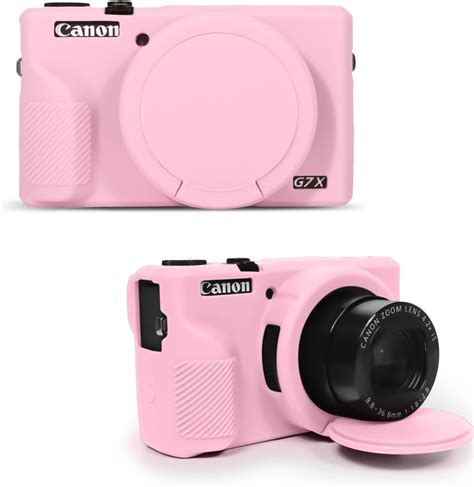
Step 4: Image Quality and Color Science
For photographers, the RAW Burst Mode is a game-changer. When enabled, the camera starts buffering images the moment you half-press the shutter. This allows you to capture action that happened up to 0.5 seconds before you fully pressed the button—perfect for capturing a bird taking flight or a child's fleeting expression. Ensure you are shooting in C-RAW (Compact RAW) to save space on your SD card without sacrificing much in the way of post-processing flexibility.
Regarding color, Canon’s "Picture Styles" are renowned. For a natural look that requires little editing, the "Standard" profile is reliable. However, if you plan on color grading your video, choose the "Faithful" or "Neutral" profile and turn the contrast down by two notches. This preserves more detail in the highlights and shadows, giving you a flatter canvas to work with in software.
Buying Guide: What to Look for in Accessories
The G7 X Mark III is a "system" camera, meaning its utility is greatly enhanced by the right peripherals. When outfitting your kit, consider these three categories:
1. Storage Solutions
Because 4K video generates a massive amount of data, not any SD card will suffice. Look for cards with a UHS-I Speed Class 3 (U3) or Video Speed Class 30 (V30) rating. These ensure the write speed is fast enough to prevent the recording from stopping abruptly. Aim for a minimum of 128GB if you plan on traveling, as 4K files will fill a 32GB card in approximately 45 minutes.
Shop the latest Electronics picks on Amazon.
See Deals →2. Power Management
As mentioned in the cons, battery life is the G7 X Mark III's Achilles' heel. Always carry at least two spare batteries. Interestingly, because the camera supports Power Delivery (PD) over USB-C, you should look for a portable charger that specifically supports "USB-PD." Standard phone power banks may charge the camera while it is off, but only PD-compatible banks can actually power the camera while it is actively recording.
3. Connectivity and Stability
If you are a solo creator, a small tripod with an integrated remote shutter is invaluable. The G7 X Mark III features Bluetooth and Wi-Fi connectivity, allowing it to pair with the Canon Camera Connect app. This setup allows your smartphone to act as a remote monitor and shutter release, which is perfect for group photos or long-exposure night shots where touching the camera would cause blur.
Advanced Menu Customization
For those who want to dive deeper, the "My Menu" tab is your best friend. Instead of digging through dozens of pages to find the "Format Card" or "Bluetooth Settings," you can pin your six most-used settings to this single page. Professional users typically pin:
- Format Card
- Movie Record Quality
- ND Filter Settings
- Wi-Fi/Bluetooth Connection
- Sensor Cleaning
- Custom Shooting Mode (C)
Finally, utilize the Custom Shooting Mode (C) on the top dial. You can set up the camera exactly how you like it for a specific recurring scenario—for example, 4K video, 1/60 shutter speed, f/1.8, and Auto ISO—and save it to the "C" position. This allows you to switch from taking high-speed photos to filming a cinematic video in a single click of the dial.
Natural Conclusion
The Canon PowerShot G7 X Mark III is a testament to the idea that size does not always dictate capability. By combining a large, modern sensor with a fast lens and professional-grade audio options, it remains one of the most versatile tools for modern content creation. The key to success with this camera lies in moving beyond its automated functions. By taking the time to configure the manual audio levels, leveraging the internal ND filter, and customizing the physical control ring, you transform the device from a simple point-and-shoot into a precision instrument.
Whether you are documenting a journey across the globe or building a brand from your home studio, the G7 X Mark III offers the flexibility to grow with your skills. It handles the technical heavy lifting of 4K data processing and focus tracking, leaving you free to focus on composition and storytelling. With the right setup, this pocketable powerhouse ensures that you never have to choose between portability and professional quality, proving itself as a worthy investment for any serious electronics enthusiast or digital creator.