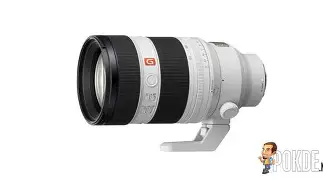
Sony Fe 50 150Mm F2 Gm Specs, Features, and Value: Is it worth the price tag?
The landscape of professional optics is often defined by compromise. Photographers are frequently forced to choose between the versatility of a zoom lens and the luminous, shallow depth-of-field provided by a prime. For decades, the gold standard for versatility has been the 70-200mm f/2.8, a lens found in nearly every professional kit bag. However, Sony has recently disrupted this long-standing paradigm with the introduction of the Sony FE 50-150mm f/2 GM. By shifting the focal range slightly wider and, more importantly, widening the maximum aperture to a constant f/2, Sony has created a lens that challenges the necessity of several prime lenses while retaining the flexibility of a zoom.
This lens sits within the prestigious G Master (GM) line, a designation that signifies Sony’s highest aspirations in terms of optical resolution, bokeh quality, and build integrity. The FE 50-150mm f/2 GM is not merely an incremental update to existing technology but a specialized tool designed for event photographers, wedding shooters, and portrait specialists who require the gathering power of an f/2 aperture across a range of commonly used focal lengths. This article provides a comprehensive deep dive into the technical specifications, real-world performance, and overall value proposition of this ambitious optic to determine if its substantial price tag is a justifiable investment for the modern image-maker.
Technical Specifications and Optical Engineering
At the heart of the Sony FE 50-150mm f/2 GM is a complex optical formula designed to suppress aberrations that typically plague fast-aperture zoom lenses. Achieving a constant f/2 aperture throughout a zoom range requires massive glass elements and a sophisticated internal structure to manage light transmission and focus speed. Sony has utilized several of its proprietary lens technologies to meet these requirements.
The lens construction includes eXtreme Aspherical (XA) elements, which are manufactured with a surface precision of 0.01 microns. These elements are critical for eliminating "onion ring" bokeh and ensuring that the lens maintains corner-to-corner sharpness even when shot wide open. Combined with Super ED (Extra-low Dispersion) and ED glass elements, the lens effectively minimizes chromatic aberration and color fringing, which are common issues in high-contrast portrait settings. Furthermore, the application of Nano AR Coating II helps to suppress internal reflections, significantly reducing flare and ghosting when shooting into backlit environments—a common scenario for wedding and stage photographers.
The physical dimensions of the lens are a testament to the laws of physics. Because of the large front element required to support an f/2 aperture at 150mm, the lens is notably larger and heavier than a standard 70-200mm f/2.8. However, Sony has employed a magnesium alloy chassis to keep the weight as manageable as possible without sacrificing the ruggedness required for professional use. The lens is fully weather-sealed, with gaskets at all joints and a fluorine coating on the front element to repel water, oil, and fingerprints.
Key Features and Performance Analysis
While the f/2 aperture is the primary headline, the lens's performance is defined by its autofocus system and handling characteristics. Sony has equipped this lens with four XD (extreme dynamic) Linear Motors. This quad-motor system is necessary to move the heavy internal focus groups with the speed and precision required for high-speed burst shooting and real-time tracking on modern Alpha bodies like the A1 or A9 series. In practice, the autofocus is nearly silent and remarkably sticky, maintaining focus on a subject’s eye even as they move through a crowded environment.
One of the most significant features for video shooters is the minimized focus breathing. Historically, zoom lenses have struggled with changes in the effective focal length during focusing maneuvers, which can be distracting in cinematic productions. Sony has engineered the FE 50-150mm f/2 GM to keep the frame remarkably stable throughout the focus range. Additionally, the lens features a physical aperture ring that can be "de-clicked" for smooth exposure transitions during video recording, along with three customizable focus hold buttons that can be assigned to various camera functions.
Optical SteadyShot (OSS) is also integrated into the lens, providing multi-axis stabilization that works in tandem with the In-Body Image Stabilization (IBIS) found in Sony cameras. This is particularly vital given the f/2 aperture; while the fast glass allows for faster shutter speeds, the weight of the lens can still induce micro-jitters. The stabilization system ensures that even at 150mm, handheld shooters can achieve crisp results at relatively low shutter speeds.
Looking for the best Cameras & Photography deals on Amazon?
Shop Amazon →Real-World Use Cases
The 50-150mm range is particularly interesting because it bridges the gap between environmental portraits and tight headshots. At 50mm, a photographer can capture a subject within their surroundings with a natural perspective. Zooming into 85mm or 100mm provides the classic portrait compression that professionals love, while the 150mm long end allows for intimate captures from a distance, such as during a wedding ceremony or a corporate keynote.
The f/2 aperture provides one stop more light than an f/2.8 zoom. This translates to half the ISO sensitivity, resulting in cleaner images in low-light venues like dark reception halls or indoor theaters. Furthermore, the f/2 aperture provides a shallower depth of field, allowing for greater subject separation and a creamy background blur that was previously only achievable with heavy prime lenses like an 85mm f/1.4 or a 135mm f/1.8.
Pros and Cons
- Pro: Exceptional Aperture - The constant f/2 aperture is a game-changer for zoom lenses, providing low-light performance and bokeh quality that rivals prime lenses.
- Pro: Versatile Focal Range - Covering 50mm to 150mm replaces the need to carry 50mm, 85mm, and 135mm primes in many scenarios.
- Pro: Advanced Autofocus - The quad XD Linear Motors provide lightning-fast, silent, and accurate tracking, even with fast-moving subjects.
- Pro: Build Quality - Professional-grade construction with extensive weather sealing and tactile controls makes it reliable in harsh conditions.
- Pro: Video Optimizations - Linear response manual focus and a de-clickable aperture ring make it a powerhouse for cinematographers.
- Con: Weight and Size - The lens is significantly heavier and bulkier than a standard f/2.8 zoom, which can lead to fatigue during long shooting days.
- Con: High Cost - The engineering required for f/2 across this range results in a price point that is prohibitive for enthusiasts and hobbyists.
- Con: Filter Size - Large front elements usually require expensive, large-diameter filters (often 82mm or larger), adding to the total cost of ownership.
Technical Comparison: Sony FE 50-150mm f/2 GM vs. Competition
To understand where this lens fits in the market, it is helpful to compare it against the lenses it is designed to potentially replace or compete with. The following table highlights the differences between the 50-150mm f/2 GM and the industry-standard 70-200mm f/2.8 GM OSS II, as well as high-end portrait primes.
| Specification | Sony 50-150mm f/2 GM | Sony 70-200mm f/2.8 GM II | …
|---|