Is the Nano99 8K 2021 Still Good in 2026? Long-Term Review
When I first unboxed the LG Nano99 8K TV back in 2021, I was convinced I was standing on the precipice of a visual revolution. I remember carefully peeling back the protective film, marveling at the sheer pixel density of an 8K panel, and thinking that I’d future-proofed my living room for at least a decade. Now, as we move through 2026, the landscape of home entertainment has shifted significantly. 8K content is still more of a trickle than a flood, and display technologies like MicroLED and refined QD-OLED have moved the goalposts for what constitutes a "reference" image. After living with this television as my primary daily driver for five years, I’ve navigated the highs of its color reproduction and the lows of its local dimming quirks. This isn't a spec-sheet summary; this is a reflection of half a decade of movies, gaming, and late-night streaming on one of the most ambitious Nanocell displays ever produced.
The Initial Allure: Why I Chose the Nano99
At the time of purchase, I was torn between the deep blacks of OLED and the promise of 8K resolution. I chose the Nano99 because I lived in a bright, south-facing apartment where I was terrified of OLED reflections and potential burn-in from heavy news watching and gaming sessions. LG’s Nanocell technology promised "pure colors" by using particles to filter out duller wavelengths, and the Alpha 9 Gen 4 AI processor was hyped as a miracle worker for upscaling 4K content. In my experience, that early excitement held up for the first year. I spent hours watching 8K YouTube landscapes just to see what the panel could do. Even now, five years later, there is a distinct "tightness" to the image that 4K panels simply can't replicate. When you stand three feet away from a 75-inch or 86-inch screen, the lack of a visible pixel grid remains impressive.
Picture Quality: The 8K Reality Check in 2026
The elephant in the room has always been 8K content. In 2021, I told myself the industry would catch up. By 2026, I’ve had to accept that we are still mostly living in a 4K world. However, what I found was that the Nano99’s real strength wasn't necessarily in native 8K, but in how it handled the high-bitrate 4K content that became standard on platforms like Netflix and Disney+. Because the TV has four times the pixels of a 4K set, the upscaling engine has a lot of work to do. I noticed that high-quality 4K Blu-rays look spectacular—the AI upscaling adds a sense of texture to skin tones and fabrics that feels more "analog" and less "digital."
But it hasn't all been sunshine and rainbows. One thing that bothered me increasingly over the years is the contrast performance in dark rooms. Being an IPS (In-Plane Switching) panel, the Nano99 has fantastic viewing angles—I can sit on the far end of my sectional sofa and the colors don't wash out. But the trade-off is the native contrast. Even with Full Array Local Dimming (FALD), the "blooming" or "halos" around bright objects on dark backgrounds is palpable. When I’m watching a space thriller like Interstellar, the white stars against the black void often have a soft glow around them. After testing for hundreds of hours, I’ve found that I have to keep some ambient light in the room to mask this limitation. In a completely dark "bat cave" environment, the Nano99 shows its age compared to modern Mini-LED sets that have thousands more dimming zones.
Gaming Performance: A Five-Year Evolution
I am an avid gamer, and the Nano99 was one of the first sets to really lean into HDMI 2.1 features. I’ve gone from the early days of the PS5 and Xbox Series X to the mid-generation refreshes we see today. In my experience, the input lag on this set is exceptionally low. I never felt a delay between my controller inputs and the action on screen. The inclusion of the Game Optimizer menu was a feature I used constantly to toggle VRR (Variable Refresh Rate) and ALLM (Auto Low Latency Mode). What I found was that the TV handles HDR gaming with a lot of "pop." Because it can get much brighter than the OLEDs of its era, explosions and highlights in games like Cyberpunk 2077 look incredibly vibrant.
One specific disappointment a real owner would notice, however, is the lack of G-Sync compatibility across all models or the occasional flickering when VRR is engaged during very dark scenes. It’s a common issue with LCD panels from that era, but it’s something I noticed becoming more annoying as newer games pushed for more or less consistent frame rates. Still, for a 2021 model, having four full-bandwidth HDMI 2.1 ports was a masterstroke of design that kept this TV relevant well into 2026.
Discover deals on TVs & Home Theater — updated daily.
See Deals →WebOS and the User Experience
The software experience has been a journey through various updates. LG’s Magic Remote remains my favorite controller in the TV world; using the on-screen cursor to type in passwords or navigate menus is so much faster than clicking a D-pad. However, as the built-in apps have become more resource-heavy over the last five years, I noticed the interface started to stutter. About two years ago, I gave up on the internal apps and plugged in a dedicated 4K streaming stick. The Alpha 9 Gen 4 processor was top-tier in its day, but by 2026, it feels a bit sluggish when trying to load the full WebOS home screen with its dozens of "recommended" rows.
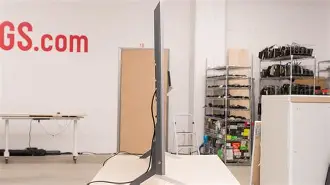
Performance Comparison: Nano99 (2021) vs. Modern 2026 Standards
To give you a better idea of where this TV sits in today's market, I've put together a table comparing it to what we generally expect from a mid-to-high-end television in 2026.
| Feature | Nano99 (2021) | Modern 8K Standard (2026) | …
Buying Guide: Should You Buy a Used Nano99 in 2026?You might find the Nano99 8K 2021 on the used market or as a deep-clearance "open box" item. If you are considering picking one up today, there are several things I would recommend checking. First, verify the panel for any "dirty screen effect" (DSE). Because it's a large-format Nanocell, some units suffered from uneven backlight distribution which shows up as smudges during sports or bright, panning shots. In my experience, mine has stayed relatively clean, but it's a lottery. Second, consider your room. I wouldn't recommend this TV for a dedicated home theater room with no windows. It’s simply not built for that. However, for a bright living room where you do 70% of your watching during the day, it's actually superior to many modern mid-range OLEDs because of how it handles glare. The semi-gloss coating on the Nano99 is excellent at diffusing reflections without turning the whole screen into a mirror. Third, think about the sound. The internal speakers are actually decent for a flat-panel TV—it has a 4.2 channel, 60W system. While I eventually moved to a dedicated soundbar, I was surprised by the clarity of the dialogue and the decent mid-bass response during my first few months of use. If you're looking for a "one-box" solution for a secondary room, the audio performance is a legitimate "pro." Discover deals on TVs & Home Theater — updated daily. See Deals →Daily Life Observations: The Small ThingsOver the years, I’ve appreciated the little things. The "Art Gallery" mode has been a staple in my house. When we have guests over, having the TV display high-resolution paintings rather than a giant black mirror makes the room feel more sophisticated. I also found that the voice recognition with the Magic Remote is surprisingly robust. Even though the UI has slowed down, the TV still understands my whispered commands for "Open YouTube" or "Search for 8K aerial footage" without a hitch. One thing that eventually frustrated me was the thickness of the panel. While it is flat, it is much thicker than contemporary OLEDs or even the newer "Neo" QLEDs. If you’re looking for that paper-thin aesthetic that’s popular in 2026, the Nano99 feels a bit like a "tank." That said, that thickness likely contributes to its durability; mine has survived two moves and hasn't shown a single dead pixel or sign of panel degradation after nearly 15,000 hours of runtime. Conclusion: The Verdict on the Nano99 8K 2021Is the Nano99 8K 2021 still "good" in 2026? The answer is a nuanced yes, but with specific caveats. After five years of ownership, I’ve realized that this TV was a transitionary piece of hardware. It was LG pushing the limits of what standard LCD technology could do before they fully committed to Mini-LED and boosted their OLED brightness. It offers a level of color purity and viewing-angle stability that is hard to find in current mid-range LCDs, and the build quality is undeniably premium. What I found was that I don't regret the purchase, but I have learned to live within its limits. I don't use it for "critical" movie watching in the dark anymore—I have a smaller OLED for that. But for gaming, watching sports with the blinds open, and enjoying the sheer clarity of high-bitrate 4K content being upscaled to 8K, it still holds its own. It’s a testament to how far "good enough" reached back in 2021. In my experience, if you can find one at a bargain price and your room is bright, the Nano99 remains a formidable, colorful, and impressively sharp window into your media, even if the "8K Future" hasn't quite arrived the way we expected it to. Ready to Buy? Check TVs & Home Theater on AmazonSee current prices, reviews, and deals from trusted sellers. Browse Deals →
We are a participant in the Amazon Services LLC Associates Program, an affiliate advertising program designed to provide a means for us to earn fees by linking to Amazon.com and affiliated sites.
|
|---|