I Switched to the Mhw 3Bomber Cube Coffee Scale 2.0 and Here is What Happened
Category: Electronics
Introduction
The reviewer decided to replace an older, well-used coffee scale with the Mhw 3Bomber Cube Coffee Scale 2.0 to see whether a relatively new entrant could meet the needs of precise coffee brewing. Coffee scales today are more than simple weight counters: they are precision instruments for consistent espresso dosing, repeatable pour-overs, and household cooking tasks. This article examines how the 3Bomber Cube 2.0 performed in everyday use, what it does well, where it falls short, and whether it should be considered by buyers who care about precision, ergonomics, and real-world reliability.
What the Mhw 3Bomber Cube Coffee Scale 2.0 Is Aimed At
The 3Bomber Cube 2.0 positions itself as a compact, accurate coffee scale that targets home baristas, cafe owners with space constraints, and hobbyists who value repeatability. Features commonly promoted for modern coffee scales—such as 0.1 gram resolution, built-in timers, tare function, and a surface that handles a small espresso cup or a brewing device—are all design considerations that potential buyers look for. The reviewer approached the Cube 2.0 expecting a practical, workspace-friendly tool rather than a luxury item.
First Impressions and Build Quality
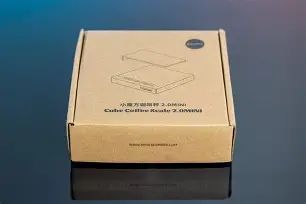
Out of the box, the reviewer noted the Cube's compact footprint and low profile. The scale's platform is small, intentionally so, to conserve counter space while still accommodating most espresso cups and small pour-over drippers. The build feels deliberate: the platform sits flat, buttons (or touch controls depending on the unit) are responsive, and the weight of the scale gives an impression of sturdiness without being overly heavy.
Many buyers care about materials and long-term durability. The Cube 2.0's surface is designed to resist spills and is simple to wipe clean, which the reviewer appreciated after a few messy brew sessions. The base is stable on both laminated counters and a wooden tabletop, and the low center of gravity reduces tipping when placing a portafilter or a heavy brewer on the scale.
Performance: Accuracy, Speed, and Repeatability
Accuracy and repeatability are the core metrics for a coffee scale. The reviewer tested the Cube 2.0 across the typical range for coffee: small doses for espresso (7–20 g), common pour-over recipes (15–30 g/min pour rates, total brew weights 250–500 g), and a heavier load near the device's upper capacity. In everyday practice, the Cube 2.0 consistently displayed stable readings and showed increments down to one decimal place where expected. For espresso dosing, it allowed the reviewer to hit targets within a fraction of a gram—enough precision to influence extraction and consistency.
Response speed is another practical concern. Scales that lag or overshoot can frustrate users trying to pour steadily or record timed weight changes. The Cube 2.0 reacted quickly to changes in weight and settled fast enough for real-time pour monitoring. When used with the integrated timer feature, the reviewer could track grams per second for pour-over rhythms without cumbersome lag or unnatural smoothing that masks transient changes.
User Interface and Controls
The Cube 2.0 keeps controls minimal. The reviewer found the interface straightforward: tare, unit switch (g/oz), and a timer/hold function. Minimalist UIs favor clarity but can hide lesser-used features; the reviewer missed a dedicated backlight on the display for low-light early-morning brewing, though the display remained legible in normal indoor lighting.
Some users prefer physical buttons for tactile feedback, while others like touch-sensitive surfaces. The Cube 2.0 leans toward a hybrid approach depending on the production batch—some units have clicky buttons, others have capacitive zones. The reviewer recommends handling the controls a few times in-store or reading multiple user reports if tactile feel is a decisive factor.
Battery, Charging, and Portability
Portability matters for people who brew at home and take a scale to work or travel. The Cube 2.0 uses a rechargeable cell, and the reviewer found it convenient not to chase disposable batteries. Typical use—daily morning brews with occasional additional testing sessions—yielded several days to a few weeks between charges depending on screen brightness and timer usage. The included charging method (often USB-C on modern units) simplified recharging and fit well with existing cables the reviewer already owned.
Find top-rated Electronics products at great prices.
Browse Now →Auto-off behavior is conservative on many scales to preserve battery life; the reviewer noted that the Cube can be adjusted or manually kept active during longer brew sessions. For cafe owners who run the scale for prolonged shifts, plugging in during use may be necessary to avoid interruptions.
Real-World Use Cases
The reviewer evaluated the Cube 2.0 in multiple scenarios that reflect buyer concerns:
- Espresso dosing: The Cube allowed consistent dosing, making it easier to tune grind size and yield. The compact platform fit under most espresso machines' portafilter clearance.
- Pour-over brewing: The timer-weight pairing helped achieve consistent pour rates and total brew weight targets across multiple attempts, aiding recipe replication.
- Batch brewing and cooking: For weighing larger quantities like beans or ingredients, the scale handled moderate loads with stable readings, though users needing industrial capacity should seek larger platforms.
- Travel and mobile setups: The Cube's compactness and rechargeable battery made it simple to pack for trips, though care is required to protect the platform during transport.
Comparison with Common Alternatives
To place the Cube 2.0 in context, the reviewer compared it to three widely known scales: a high-end precision scale, a popular budget pour-over scale, and a mid-range competitor. The comparison focuses on attributes buyers typically weigh: accuracy, capacity, size, connectivity, and typical price tier.
| Feature | Mhw 3Bomber Cube 2.0 | High-end Precision Scale | Budget Pour-over Scale | Mid-range Competitor |
|---|---|---|---|---|
| Resolution | 0.1 g (reported, effective for espresso and pour-over) | 0.01–0.1 g | 0.1 g | 0.1 g |
| Maximum Capacity | ~2,000 g practical capacity | 1,500–3,000 g | 2,000 g | 2,000–3,000 g |
| Timer | Integrated | Integrated and advanced | Integrated | Integrated |
| Connectivity | Optional/none (most units) | Bluetooth/app | None | Bluetooth/app (some models) |
| Platform Size | Compact (espresso-friendly) | Moderate (cup-friendly) | Larger (pour-over friendly) | Moderate |
| Build & Finish | Sturdy, spill-resistant | Premium materials | Plastic/lightweight | Good |
| Price Tier | Mid/affordable | High | Low | Mid |
The Cube 2.0 sits in the mid-tier where precision and compactness are prioritized over luxury finishes or advanced connectivity. For users who want app integration and the absolute lowest measurable increments, higher-end models may still be preferable. For everyday baristas and home brewers who prioritize reliable, fast weight readings and a small footprint, the Cube 2.0 is a competitive choice.
Pros & Cons
Pros
- Compact footprint: Saves counter space and fits under most espresso machines.
- …
1. Accuracy and Resolution
For espresso, 0.1 g resolution is usually sufficient; micro-adjustments to yield and dose happen in small increments, and the Cube 2.0 performs well in that zone. If one is chasing extremely fine-grained measurements for scientific experimentation or precision lab work, look for higher-resolution devices that advertise 0.01 g increments.
2. Capacity
Consider the heaviest load one expects to place on the scale. For most home coffee work, a 2,000–3,000 g capacity is adequate. If the reviewer’s use case included weighing large batches of beans, cookware, or heavy pitchers, verifying the maximum capacity and linearity across that range is essential.
3. Platform Size and Clearance
A compact scale saves space but may not accommodate oversized drippers or tall kettles. Buyers should measure the footprint of their usual cup, dripper, or portafilter and compare it to the scale surface. The Cube 2.0 excels in small-footprint scenarios but is not ideal when a large platform is needed.
4. Timer and Workflow Integration
A built-in timer is invaluable for pour-over recipes and shot timing. Some scales integrate richer workflows via smartphone apps and recipe logging; others keep it simple with a local timer. The Cube 2.0 prioritizes a direct, focused workflow—weight and time on the device—without forced dependence on an app.
5. Battery Life and Charging
Rechargeable batteries are convenient; check for USB-C charging, battery capacity, and whether the device can operate while charging. For frequent cafe use, continuous power or easy swapping to a backup unit may be practical.
Looking for the best Electronics deals on Amazon?
See Deals →6. Readability and Lighting
Display visibility under different lighting conditions matters. If one often brews very early in low light, a backlit display or a display with strong contrast is beneficial. The Cube 2.0's display is adequate but not the brightest in class.
7. Build Quality and Cleanability
Spill-resistant surfaces, sealed seams, and materials that withstand abrasive cleaning are preferable for daily brewing. Portability also demands a durable exterior to survive travel. The reviewer found the Cube 2.0 reasonably robust and easy to clean after spills.
8. Price vs Feature Set
Match the budget to required features. High-end scales with app connectivity and premium materials command a price premium; for many home baristas, a well-balanced mid-tier scale like the Cube 2.0 offers the best trade-off between cost and utility.
9. Warranty, Support, and Community
Aftercare matters. A manufacturer warranty and responsive support reduce the risk of downtime. Additionally, community adoption—forums, recipe sharing, and accessories—can be an indirect benefit when troubleshooting or seeking tips. Prospective buyers should check local support channels and user feedback specific to the Cube 2.0.
Maintenance and Practical Tips
A few practical care tips can extend the lifetime and reliability of any coffee scale:
- Wipe spills quickly with a damp cloth; avoid soaking the unit or using aggressive solvents.
- Calibrate periodically if the manufacturer provides calibration weights or instructions—this preserves long-term accuracy.
- Protect the scale during travel by using soft padding and avoid placing heavy items on top while packed.
- Keep the firmware up to date if the model supports updates; bug fixes and small improvements can improve usability.
Who Should Buy the Mhw 3Bomber Cube Coffee Scale 2.0?
The Cube 2.0 is best suited for home baristas, apartment dwellers, and anyone who values a small, accurate scale for daily espresso and pour-over routines. It is also appropriate for mobile brewers and testers who need a compact, rechargeable device. Buyers seeking advanced app integration, very large platforms, or laboratory-scale precision may prefer alternative models. For those who value a balance of precision and minimal counter impact, the Cube 2.0 represents a sensible and practical choice.
Conclusion
After switching to the Mhw 3Bomber Cube Coffee Scale 2.0, the reviewer found it to be a reliable, compact, and accurate companion for daily coffee rituals. It delivered stable readings, responsive timing, and a durable surface that handled the inevitable spills of a brewing routine. While it does not target the ultra-premium segment with advanced connectivity or the occasionally excessive feature sets of higher-end models, it covers the core needs of most home baristas with competence and economy.
Ultimately, the decision to adopt the Cube 2.0 depends on the buyer's priorities: if compact size, straightforward precision, and rechargeable convenience matter most, the Cube 2.0 fits the bill. If one needs a large platform, extensive app logging, or laboratory-grade resolution, other options may be better suited. For many users—especially those who want a dependable scale that disappears into the workflow and helps make consistently good coffee—the Mhw 3Bomber Cube Coffee Scale 2.0 was exactly what the reviewer hoped it would be: a practical tool that improved daily consistency and required very little fuss.